

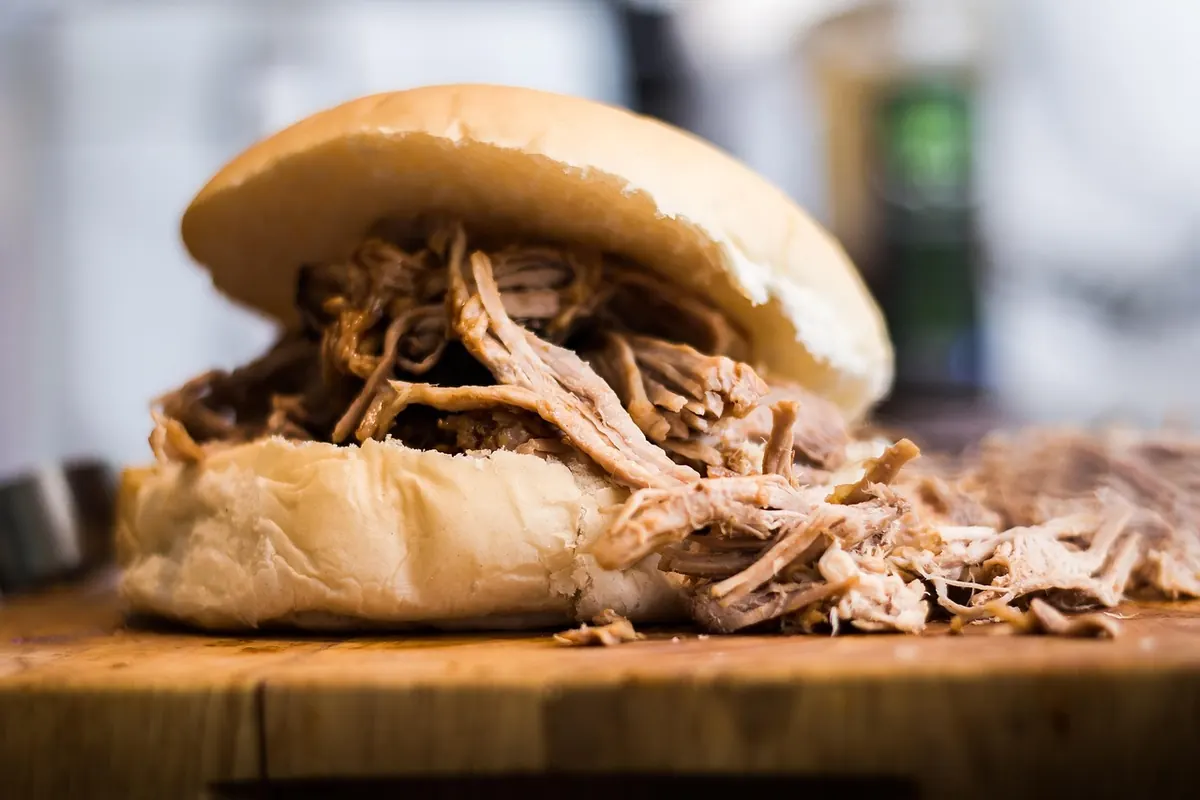
Pulled pork has settled into British cooking so completely that it's easy to forget how recently it arrived. It suits the way we cook here: a cheap, forgiving cut, a long afternoon in a low oven or a kettle barbecue, and a pile of soft buns at the end of it. What makes this version British is the sauce. Cider vinegar, brown sugar and a spoonful of English mustard give a sharpness that cuts through all that sweet, smoky fat. Make it for a crowd, make it on a Sunday, and keep the leftovers.
Choose the right cut of pork
You want shoulder, not loin and not leg. Shoulder is striped with fat and connective tissue that collapses over a long cook into something spoonable; loin dries out and goes stringy, and leg is leaner with a firmer grain that never quite surrenders.
A 2–2.5kg shoulder feeds eight to ten people generously once it's shredded and sauced, with enough left for a second meal. Bone-in gives you a little more flavour and a natural shape to cook around, but a boned and rolled joint is easier to rub, easier to carve and quicker to cool. Ask your butcher to leave a good fat cap on top — roughly a centimetre — and to score the rind if it's still attached. If you're cooking rind-on, you can slice it off before rubbing and roast it separately for crackling, or leave it underneath and accept softer skin.
Rub it tonight, cook it tomorrow
Salting ahead is the single biggest improvement you can make. Salt draws moisture out, dissolves, and is pulled back into the meat, seasoning it all the way through instead of just on the surface.
Pat the joint dry with kitchen paper, then work in this rub:
- 2 tbsp soft light brown sugar
- 1 tbsp smoked paprika
- 2 tsp English mustard powder
- 2 tsp fine sea salt
- 1 tsp coarsely cracked black pepper
- 1 tsp garlic granules
- 1 tsp onion granules
- ½ tsp cayenne pepper, or to taste
Get it into every crevice, wrap the joint tightly in cling film and leave it in the fridge overnight. If you've only got two hours, that still helps. Take it out of the fridge half an hour before it goes in the heat so the middle isn't stone cold.
Three ways to cook it
In the oven
Set the oven to 140°C fan (150°C conventional, gas 2). Sit the pork in a roasting tin on a rack or on a bed of sliced onion, pour 200ml of water or cider into the base, and cover tightly with foil. Cook for roughly six to seven hours, checking at five. Baste with a few spoonfuls of the vinegar sauce every hour or so once the foil comes off for the last hour.
On a kettle barbecue
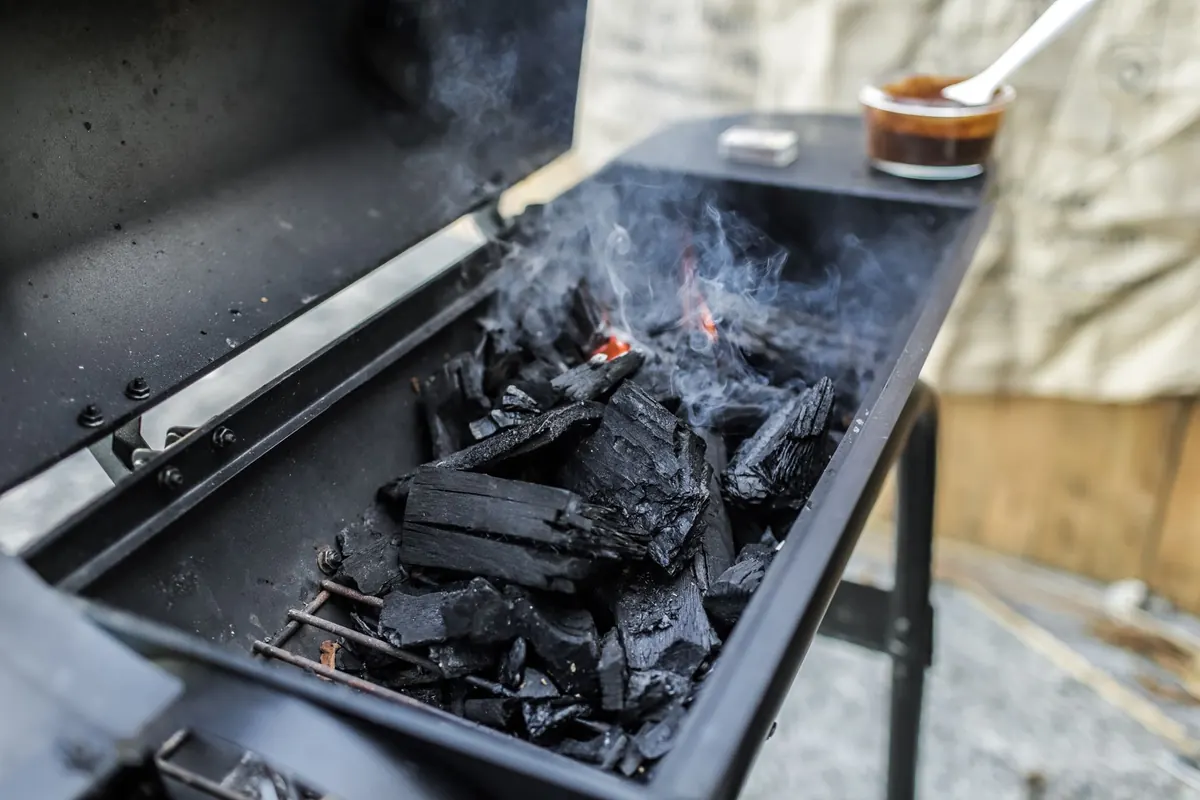
Set up for indirect cooking with a drip tray in the middle and coals either side, aiming for 120–135°C. Add a couple of chunks of apple or oak wood early on. The pork will take eight to ten hours. It'll hit a plateau around 70°C and sit there for what feels like forever — that's moisture evaporating and the collagen breaking down, so don't panic and don't crank the heat. Wrap it in foil at that point to push through.
In a slow cooker
Rub, then cook on low for eight to nine hours with a splash of cider in the base. You lose the bark, so finish it: shred the meat, spread it on a tray, spoon over the sauce and blast it under a hot grill for ten minutes until the edges catch. That single step makes the difference between stewed and barbecued.
Whichever route you take, the pork is ready when it reaches 90–95°C in the thickest part and a skewer slides in with no resistance at all. Pork should always be cooked through, so check rather than guess.
The apple cider vinegar sauce
This is the part that stops the whole thing tasting heavy. It's a thin, tangy sauce designed to be poured over the meat at the end, not thickened into a glaze.
- 200ml cider vinegar
- 3 tbsp tomato ketchup
- 2 tbsp soft light brown sugar
- 1 tbsp Worcestershire sauce
- 1 tsp English mustard
- ½ tsp chilli flakes
- A good pinch of salt
Warm everything gently in a pan until the sugar dissolves, then take it off the heat and let it cool. Don't boil it hard — you'll lose the sharpness that makes it worth making. Use it as a mop during the last hour of cooking and keep a jug back for the table.
Rest it, then pull it properly
Wrap the joint in foil, then in a couple of old towels, and leave it alone for at least 45 minutes. An hour is better. This is not optional: the juices redistribute, the meat firms up enough to shred rather than mush, and it stays hot far longer than you'd expect.
Pour the resting juices into a jug, let the fat rise and spoon most of it off. Then pull the pork with two forks, or with your hands in cotton gloves if it's cool enough to handle. Discard the big lumps of fat and any string, tear the meat into rough pieces rather than a paste, and fold through a few tablespoons of the sauce along with the defatted juices. Taste and add more vinegar sauce, salt or a little sugar.
What to serve with it
Soft buns — brioche, milk rolls or a plain floury bap — lightly toasted so they don't collapse. After that:
- Sharp slaw with yoghurt, mustard and plenty of vinegar
- Quick-pickled red onion or cucumber
- Dill pickles or gherkins, sliced lengthways
- A thin, watery chilli sauce rather than a thick sweet one
- Jacket potatoes, loaded fries or a tray of nachos for the leftovers
It also works over rice with a squeeze of lime, folded into a cheese toastie, or piled onto a salad with the slaw and a few extra pickles. Cool leftovers quickly, keep them in the fridge for up to three days, and reheat until steaming hot all the way through.
Timings at a glance
Two nights before, buy the shoulder and rub it. The night before, wrap and chill. On the day, oven at 140°C fan for six to seven hours, or the barbecue at 120–135°C for eight to ten, or the slow cooker for eight to nine on low. Rest for an hour, pull, sauce, and eat whenever people turn up. If you're feeding a crowd and the timing wobbles, rest it longer and serve ketchup and pickles while you shred — nobody has ever complained about that.
Related posts
More stories you’ll love reading