
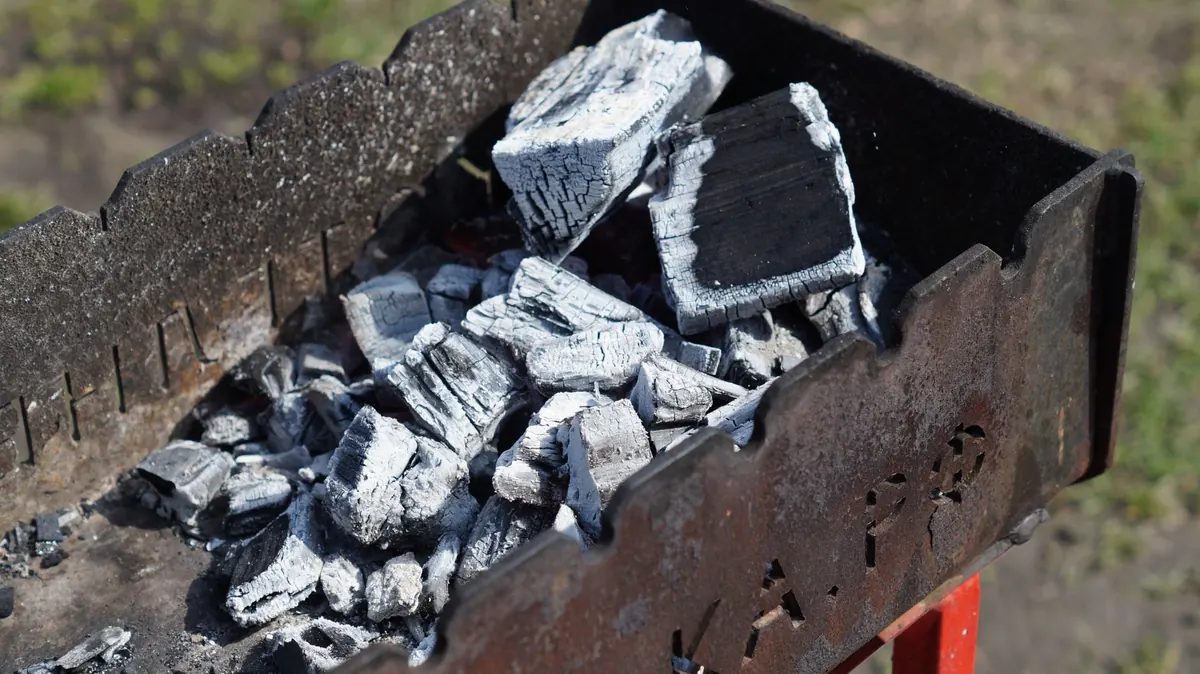
Two-zone cooking is the most useful skill you can pick up on a charcoal grill. It costs nothing, needs no extra kit, and turns a barbecue that only knows how to be hot into one that can roast a chicken, cook a shoulder of pork slowly, or handle a fillet of hake without turning it to cardboard. You are simply putting the coals on one side and leaving the other side empty. That is the whole trick. Everything else is learning what to do with the space you have made.
Why two zones beat one
Over the coals, heat is fierce and direct. That is what you want for chops, skewers, thin steaks and anything that should be coloured in minutes. Beside the coals, with the lid on, the grill behaves like an oven: slower, gentler, and far more forgiving. Between the two there is a gradient, which means there is a sensible spot for almost anything.
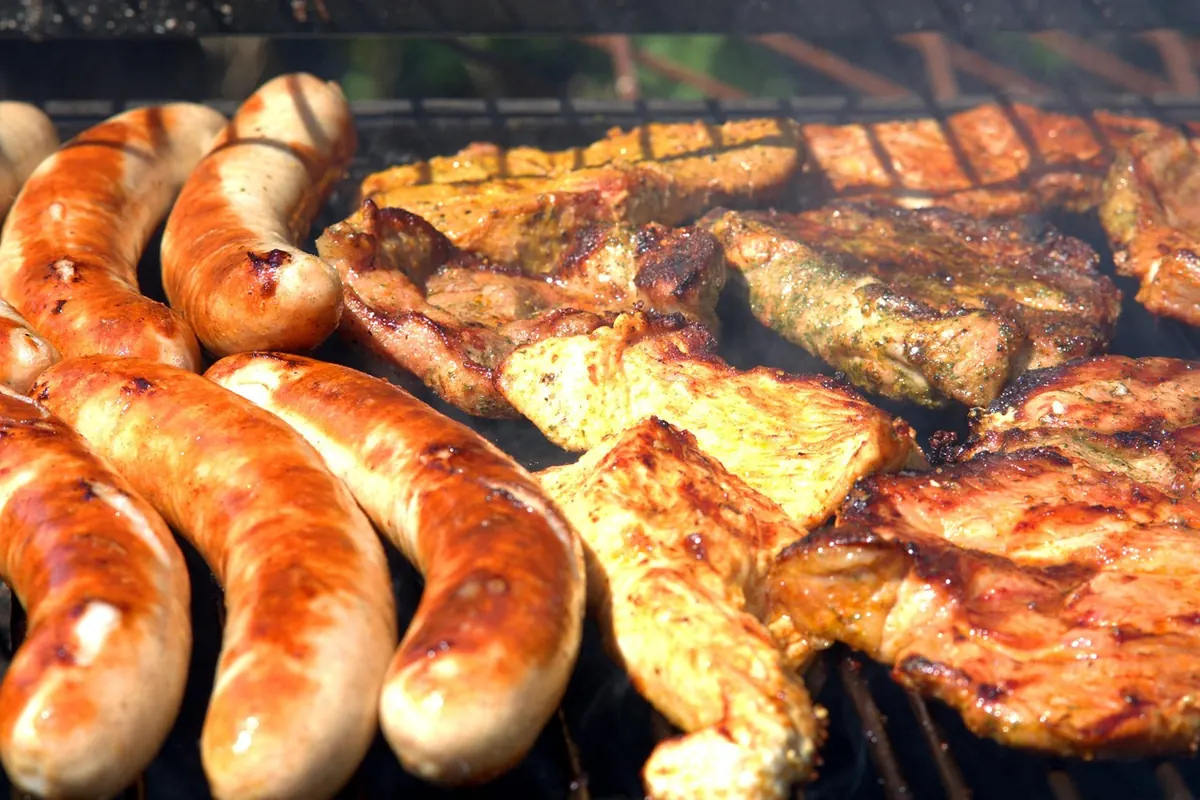
The practical gains show up straight away. Dripping fat no longer lands on hot coals, so flare-ups stop dictating the cook. You can hold one thing warm while you finish another. And you can cook two things at once that want completely different treatment — a spatchcocked chicken on the indirect side, halloumi over the coals, both ready at roughly the same time.
Two zones are not about cooking in two places at once. They are about deciding where your food sits at any given moment.
Setting up the coals
A standard kettle or barrel grill is all you need. Work through this sequence and you will have a stable two-zone fire in about twenty minutes.
- Fill a chimney starter about two-thirds full. On a 57cm kettle, roughly 25 to 30 briquettes is a sensible starting point. Briquettes give a steadier, longer burn for roasts; lumpwood lights faster and gives a cleaner flavour.
- Light it and wait properly. Tip the coals out only when the top layer is grey with ash and there is no black left in the middle. Dumping half-lit coals is the quickest route to a bitter, uneven cook.
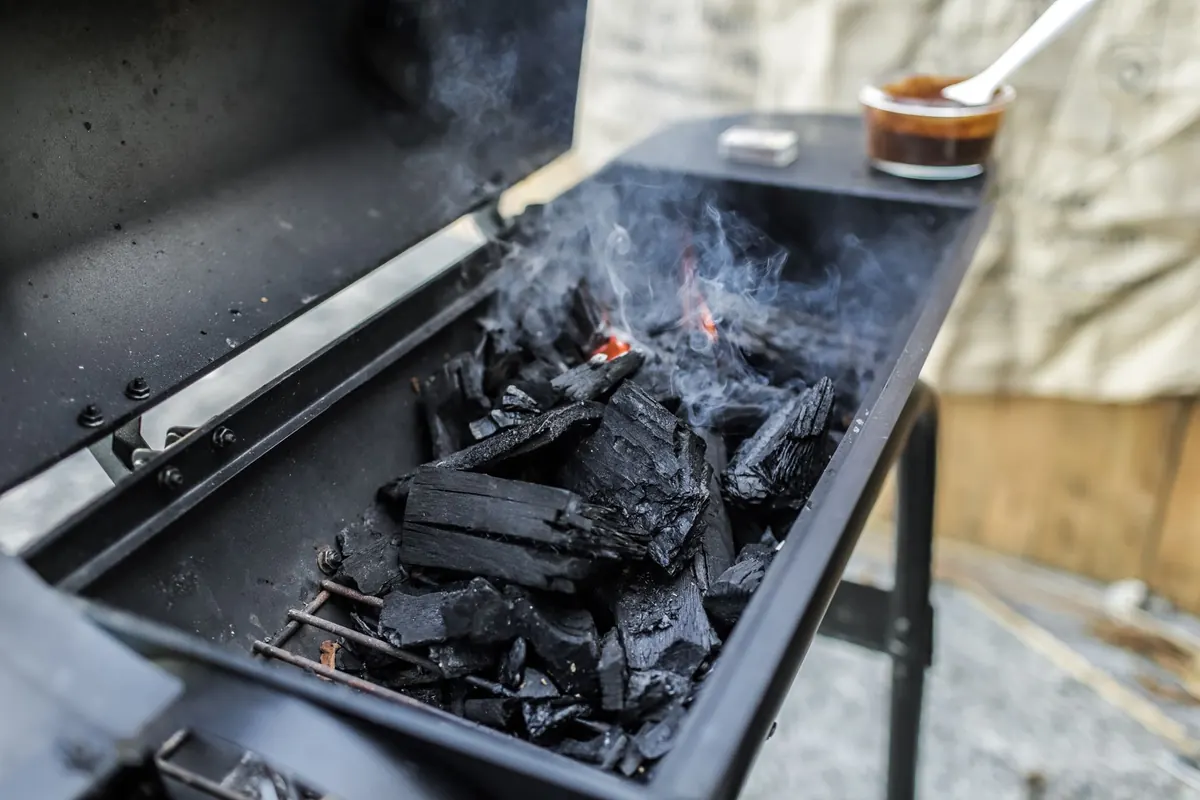
- Bank them to one side. Spread the lit coals across one third to one half of the coal grate — one layer deep for a moderate fire, two or three deep if you want more heat. The empty half is your indirect zone.
- Add unlit fuel for long cooks. For anything over an hour, tuck a few unlit briquettes against the far edge of the lit pile. They will catch gradually and keep the fire alive without a big spike in heat.
- Slide a drip pan under the food. A foil tray in the empty half catches fat, keeps the base clean and stops the smell of burning drips. A splash of water, stock or cider in the tray adds gentle moisture.
- Fit the grate, close the lid and let it settle. Give it ten to fifteen minutes with the vents open before any food goes near it.
Dials, drafts and steady temperatures
On a charcoal grill the bottom vent is the accelerator and the top vent is the chimney. Keep the top vent open, or very nearly open, so heat and smoke are drawn across the food rather than trapped and turning stale. Control the temperature with the bottom vent, and adjust in small increments. Charcoal takes about ten minutes to answer, so make a change, wait, then judge.
Cooking with the lid down is what makes indirect heat work. Every time you lift it you dump warmth and add time, so resist the urge to look. If you can hold your hand at grate level on the indirect side for five or six seconds, you are in a good roasting range. A probe thermometer clipped at grate level tells you far more than the dial in the lid, which mostly measures the air just under the metal.
A few habits ruin more cooks than bad charcoal ever will:
- Choking the top vent to bring the heat down, then wondering why everything tastes sooty.
- Piling on more lit coals when the grill is already at temperature.
- Chasing the thermometer every two minutes instead of letting the fire settle.
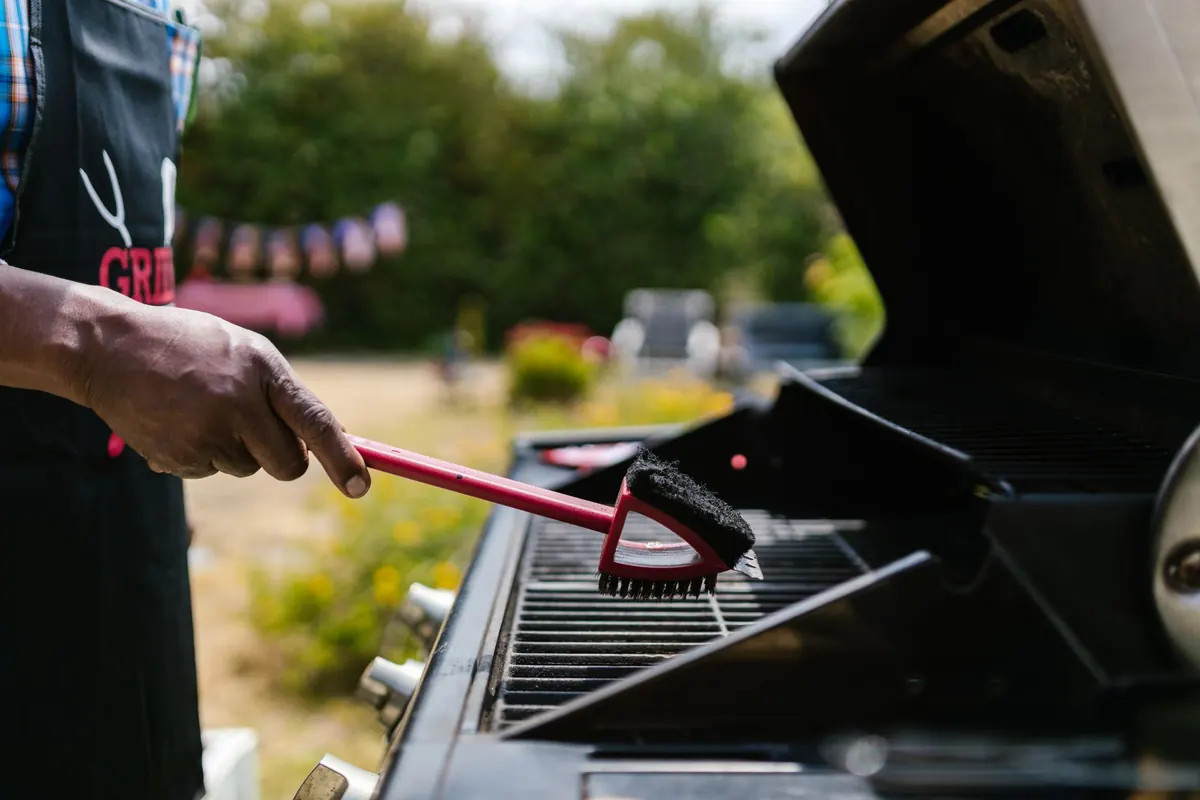
- Leaving the indirect side bare, then scrubbing burnt fat off the base for an hour afterwards.
Cooking a roast across two zones
Place the joint or bird in the middle of the empty side, as far from the coals as the grill allows, with the drip pan underneath. Lid on, vents set, and aim for a moderate indirect heat — somewhere around 160–180°C for slower cooks, a little hotter for poultry you want finished within the hour.
Sear first or sear last?
For a chicken or a rib of beef, a few minutes over the coals on each side gives colour and flavour before you move it across. The reverse works just as well, and is more forgiving on thick joints: cook gently in the indirect zone until you are close to your target, then finish over the coals for a crisp skin or a dark crust. Just remember the second approach moves fast, so stay with it.
Knowing when it is done
Use a probe thermometer in the thickest part, away from bone. For poultry, follow official food safety guidance and check that the juices run clear and the meat is piping hot throughout. Rest roasts loosely tented for ten to twenty minutes; the temperature will climb a little as it sits, and the juices will settle back into the meat instead of running onto the board.
Delicate foods: fish, shellfish and vegetables
This is where two-zone cooking earns its keep. Fillets of cod, bream or mackerel, whole fish, scallops, prawns and thick vegetable steaks all do better beside the coals than over them. Keep the indirect side at around 150–180°C, oil the grate and the fish, and leave it alone until it releases cleanly — turning too early is what tears skin.
Whole fish stuffed with lemon and herbs will take fifteen to twenty-five minutes depending on size. Thin fillets may need only eight. Shellfish benefit from a minute or two directly over the coals for colour, then a move across to finish gently. The same applies to aubergine, cauliflower steaks and halved peppers: a little char first, then a slow finish with the lid down.
Layouts for bigger cooks
Once the basics click, you can shape the fire to suit the job. Two banks of coals at opposite edges create a wide indirect zone down the middle — useful for a large joint or two trays side by side. A single bank pushed hard against one wall gives you the biggest possible indirect area. If you need to top up mid-cook, light a small chimney and add lit coals to the existing pile rather than unlit ones, which will smother the fire while they catch. A hinged grate makes that far easier.
Your first two-zone cook
Start with a spatchcocked chicken. Bank a chimney of lit coals to one side, put a foil tray in the empty half, and set the bird skin-side up over the tray. Lid on, top vent open, bottom vent about a third open, and leave it for fifty to sixty minutes at roughly 190–200°C. Check the juices run clear, then — if you want crisper skin — give it three or four minutes skin-side down over the coals before resting.
Get that right and you have learned the pattern for everything else: build the fire on one side, choose your spot, close the lid, and let the grill do the work.
Photo: Alex Frost / Pexels
Related posts
More stories you’ll love reading